Upstairs rooms that stay hot
When the bedrooms upstairs stay hot into the evening, heat is usually coming straight through a thin or gappy ceiling. A sealed, even layer above them is often the simplest place to start.
Hot upstairs rooms and a climbing power bill often trace back to a thin attic. We seal the gaps, then blow in an even layer.
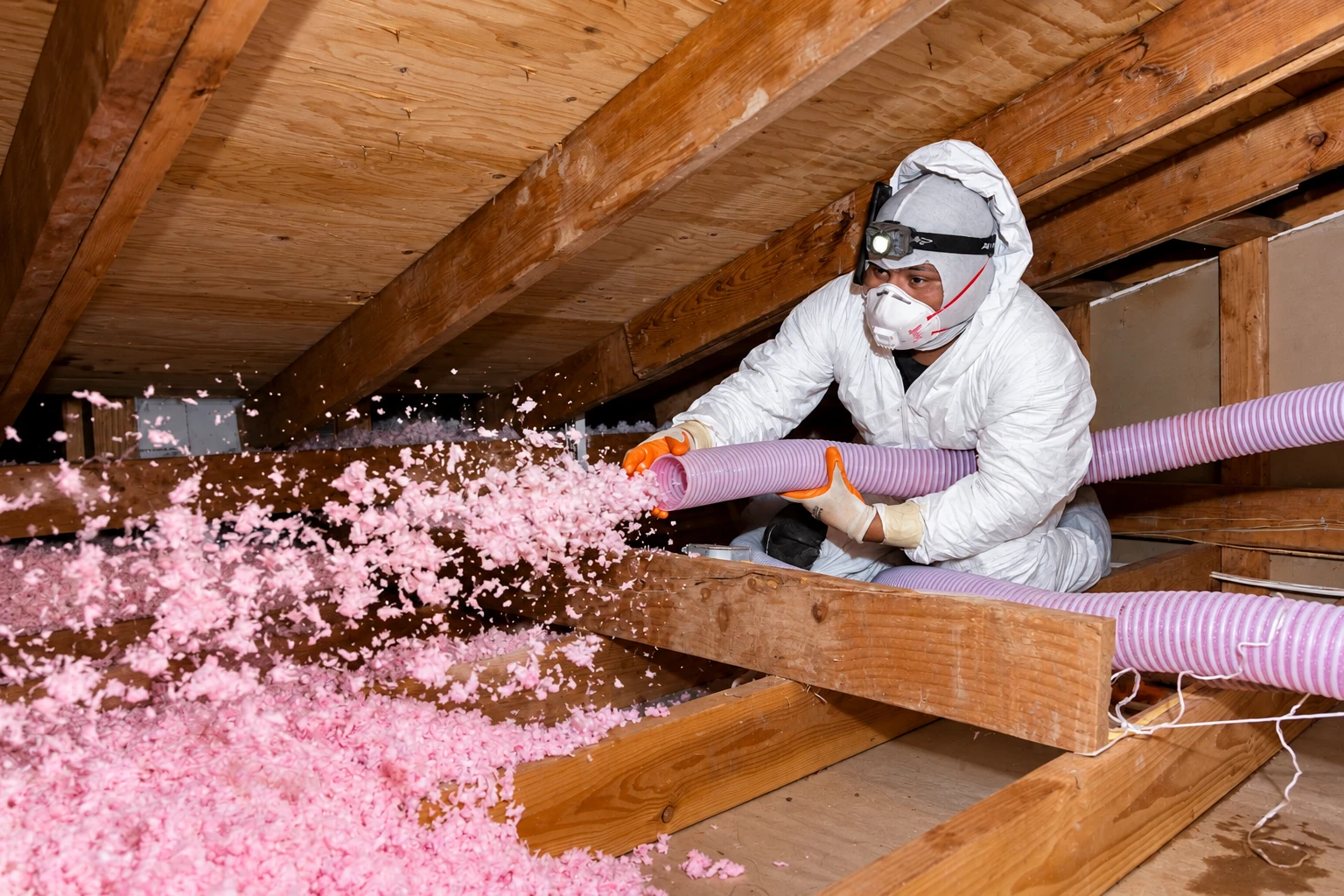
Blown-in insulation is loose cellulose or fiberglass blown through a hose across your attic floor, and E&J South Pasadena Spray Foam Insulation installs it in South Pasadena homes so the ceiling does a better job of slowing heat between the attic and your rooms.
Most people call us about a hot upstairs, a drafty room over the garage or a power bill that keeps going up. In older houses I often find only a few inches left up there, packed down, with gaps around lights and pipes letting attic air straight into the rooms below. We're based in South Pasadena and work in Pasadena, Alhambra, Glendale and the other cities around it.
The price comes down to the size of the attic, how many inches are already there, whether old material has to come out first and how many gaps need air sealing, which is closing them off before any fill goes in. The schedule turns on that same prep, plus an inspection when your job needs a permit. I look at the space first and put the work in writing, so you can compare it fairly.
Before anyone mentions cellulose or fiberglass, I get up into the attic to see how much is there, what shape it's in and where air is getting through.
New insulation over a leaking roof or old wiring just wastes your money, so if something needs fixing first, I'll tell you at the estimate rather than surprise you later.
Our install crew does the work, and I come back to walk the finished job with you before we call it done, so you see what you paid for.
We start with the gaps, not the insulation. Our crew seals the holes around wiring, can lights, pipes and the attic hatch first, because loose fill doesn't stop air, and insulation sitting in a draft does far less than it should. If the old material up there is soaked or full of droppings, we take it out through our insulation removal work instead of burying the problem under a fresh layer.
Then we set baffles at the eaves, stiff channels that hold the fill back from the eave vents so the attic keeps breathing and moisture doesn't settle in the framing. We look for an even layer that reaches out to the edges of the ceiling, because the edges are where a rushed job goes thin, and that's exactly where you need it. You're welcome to look for yourself when we're done, or we'll show you photos.
We blow in either cellulose or fiberglass, and I'll talk through which suits your attic rather than push one. Some people ask about spray foam, which costs more and seals air while it insulates. For most attics I'd seal the gaps and top up with loose fill, unless your ductwork runs through the attic, and then foam is worth a look. If the drafts are in the walls and floors too, we can plan the whole house under home insulation.
When the bedrooms upstairs stay hot into the evening, heat is usually coming straight through a thin or gappy ceiling. A sealed, even layer above them is often the simplest place to start.
Rooms over a garage often run hotter or colder than the rest of the house, and the attic above them is where we usually find the thinnest coverage.
Older houses often have just a few inches of insulation left, settled and packed down over the years. Sealing the gaps and topping it up is usually money well spent.
If a roof leak or pests have spoiled the old layer, the leak or the pests get dealt with first. Otherwise fresh fill just goes bad the same way.
Send the form and we'll reply within one business day to set a time. I'll come out, look at your attic and give you a free written estimate, with no obligation.
The sealing, any removal and the new fill are spelled out in writing, so you can line our estimate up fairly against anyone else's before you decide.
The estimate is free and obligation-free, so take your time with it, ask your questions and call us back when you're ready, or not at all.
If anything on the estimate isn't clear, ask me before the crew ever climbs up, because I'd rather answer it now than have you surprised later.
These example photos show cellulose and fiberglass fill, baffles at the eaves and sealed attic gaps, so we can talk through what suits your attic.
Here are the questions South Pasadena homeowners ask us most about blown-in attic insulation, from cost to permits to who's allowed to do it.
Blown-in insulation in the Los Angeles area usually costs about $1,600 to $3,600 per job. Where your attic lands depends on its size, how much is already up there, how much sealing it needs and whether old material has to come out. I'll give you your own figure in writing after I've seen the space.
A good attic check looks for active knob and tube wiring, an older wiring style, plus vermiculite insulation, bath fans venting into the attic and roof leaks. Anything it finds becomes part of the plan before any sealing starts. Vermiculite may contain asbestos, so if I see it, I'll raise it with you before anyone disturbs it.
South Pasadena's Building Division issues permits for insulation, and skipping a required permit here can bring fines and penalties for both the owner and the contractor. When your job needs one, we take care of the application and set up the inspection. Each city decides what needs a permit, so we check with the building office for the city your home is in.
In California, contractors who install insulation for temperature or sound control fall under the state's C-2 Insulation and Acoustical Contractor class. South Pasadena also checks that your contractor holds a valid state license and any required workers' compensation insurance, and contractors and subcontractors need a city business license to work here. We're licensed and insured.
California's state contractors board limits a down payment to $1,000 or 10 percent of the contract price, whichever is less. Payments after that are listed in the contract and follow the work done or materials delivered, so what you've paid keeps pace with the job instead of running ahead of it.
We're open until 11 PM every day, so call (626) 597-0202 after work or send the form.