
Attics where the ductwork runs
Foam costs more than loose fill, but when the ducts live in the attic, sealing the roof line brings them inside the insulated space, and that's where I think foam earns its price.
If the rooms upstairs run hot or drafty, we seal and insulate the attic in one layer of foam, planned around moisture and venting.
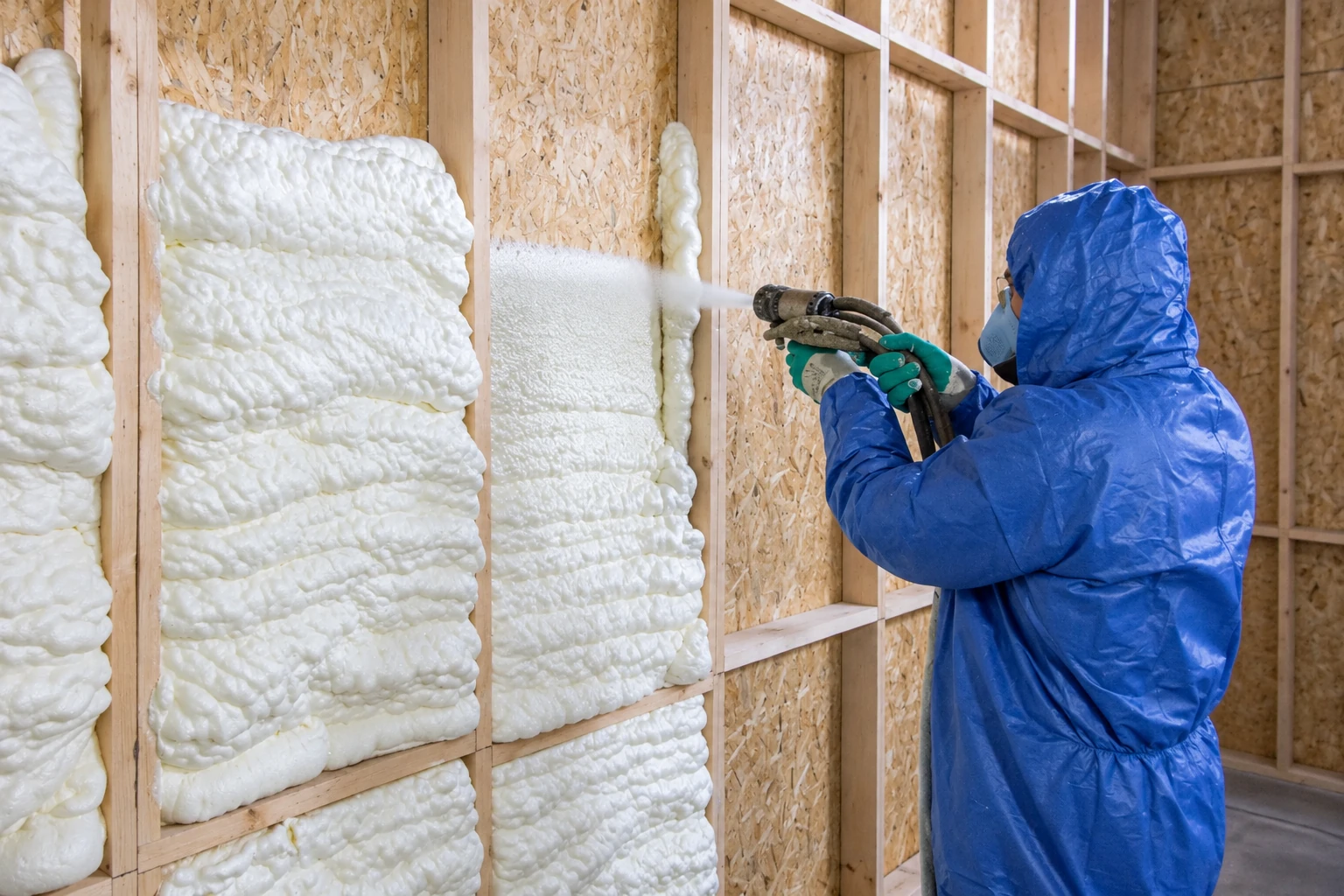
Open-cell foam insulation is a soft spray foam we apply under the roof deck or inside the walls of South Pasadena homes, and at its usual thickness air can't pass through it, so the same layer insulates the house and stops the drafts.
The price mostly follows the square footage we cover, how deep the foam goes, whether old insulation has to come out first, how hard the space is to reach and whether the product or code calls for a covering such as drywall over the foam. The schedule turns on any repairs that come first, a permit if the city wants one, when your family can be away from home, and the weather, because the foam goes on best when temperature and humidity suit it. My estimate puts the work for your house in writing, so you can compare it fairly with anyone else's.
The state licensing board counts anyone who installs insulation as an insulation contractor, so it's fair to ask whoever you hire about their license. We're licensed and insured, and the job is backed by our satisfaction guarantee.
I come out to look at the job and write the estimate, our install crew does the work, and I walk the finished job with you before we call it done.
If the roof leaks or the wiring is old, I'll tell you to fix that first, because foam sealed over a problem hides it and wastes the money you spent.
I spent my early working years insulating offices, warehouses and metal buildings, where every step has its order, and I started this business in 2023 to bring that order to homes.
I come out first and look hard at the attic or walls before we talk about materials, because foam over old insulation that was soaked or full of droppings just seals the problem in. If that's what we find, it comes out before anything new goes up. Then our install crew closes the gaps around pipes, wires and the hatch, and carries the foam to full depth out at the eaves, where coverage usually runs thin.
When we seal an attic with open-cell foam, we work out how moisture will get out of it and check how any gas appliance up there vents, all before anyone sprays. I also give you the product name early, so anyone in the house with asthma or allergies can look it up and decide before the job is booked.
Open-cell foam isn't a moisture barrier, so if the trouble starts in a damp crawl space, a crawl space vapor barrier usually comes first. Property managers can call us for the same careful order on offices and rental buildings through our commercial insulation work.
Foam costs more than loose fill, but when the ducts live in the attic, sealing the roof line brings them inside the insulated space, and that's where I think foam earns its price.
That room often runs hot in summer and has cold floors in winter, because air leaks in from the garage. Foam seals those gaps and insulates in the same pass.
When the drywall is off, open-cell foam fills the stud bays around pipes and wiring and seals them, which is hard to match once the walls are closed up again.
If nothing but storage is up there, sealing the gaps and topping up blown-in fill, loose insulation blown through a hose, usually costs less and does the job, and I'll tell you so.
We reply within one business day to set a time for me to see the space, and the on-site estimate is free and comes with no obligation. Afterward, I put the work in writing for you.
A rough square footage of the attic or walls, even from an old floor plan, helps me plan the visit and gives us a starting point for the written estimate.
If a furnace or water heater burns gas in your attic, tell us when you write, because how it vents shapes the whole plan for a sealed attic.
Let us know if anyone in the house has asthma, allergies or skin trouble, so I can share the product name with you before we talk about dates.
These photos show foam on attic roof lines, filled wall cavities and finished covers, examples of layouts and finishes to talk through at your estimate.
These are the questions South Pasadena homeowners ask most before foam goes into an attic or wall, answered as plainly as I can.
Spray foam insulation in the Los Angeles area usually costs about $2 to $5 per square foot, and one national cost guide puts open-cell at the low end of spray foam prices. That's the going rate in the area, not our quote. Your price depends on the area, the depth and any prep, and I put it in writing after I've seen the space.
U.S. product safety staff advise that everyone leave the house for at least 24 hours during spray foam installation, so plan a place for the family and pets to stay for at least that long. We'll go over the day and your re-entry time, when you can come back in, with you before the crew arrives.
Yes, but a sealed attic needs a way for moisture to leave, because open-cell foam stops air while still letting water vapor through. Federal building guidance also says a gas furnace or water heater in a sealed attic should be a direct-vent, sealed-combustion unit that vents outdoors. Those two questions are why we look before we spray.
Product safety guidance says anyone with skin conditions, respiratory allergies, asthma or an earlier reaction to a foam chemical should read the product information carefully and, if needed, consider other insulation. That's why I give you the product name early, and if foam isn't right for your household, blown-in fill or another option may suit you better.
South Pasadena's Building Division issues permits for work that alters a building, and it decides whether your foam job needs one. Its Permit Technician answers questions at permittech@southpasadenaca.gov or (626) 403-7224, and applications go through the city's Open Gov Portal. We check with the city for your job, and when a permit is needed, we take care of the application and set up the inspection.
In most of South Pasadena, construction is allowed 8 a.m. to 7 p.m. on weekdays, 9 a.m. to 7 p.m. on Saturdays, and 10 a.m. to 6 p.m. on Sundays and city holidays, while Southwest Monterey Hills has its own rules. We set the crew's day inside those hours, and if you live in Pasadena, Alhambra or Glendale instead, we check that city's rules.
Call (626) 597-0202 or use the form, and one visit will tell you whether foam or a simpler fix suits your house better.