An attic with only a few inches
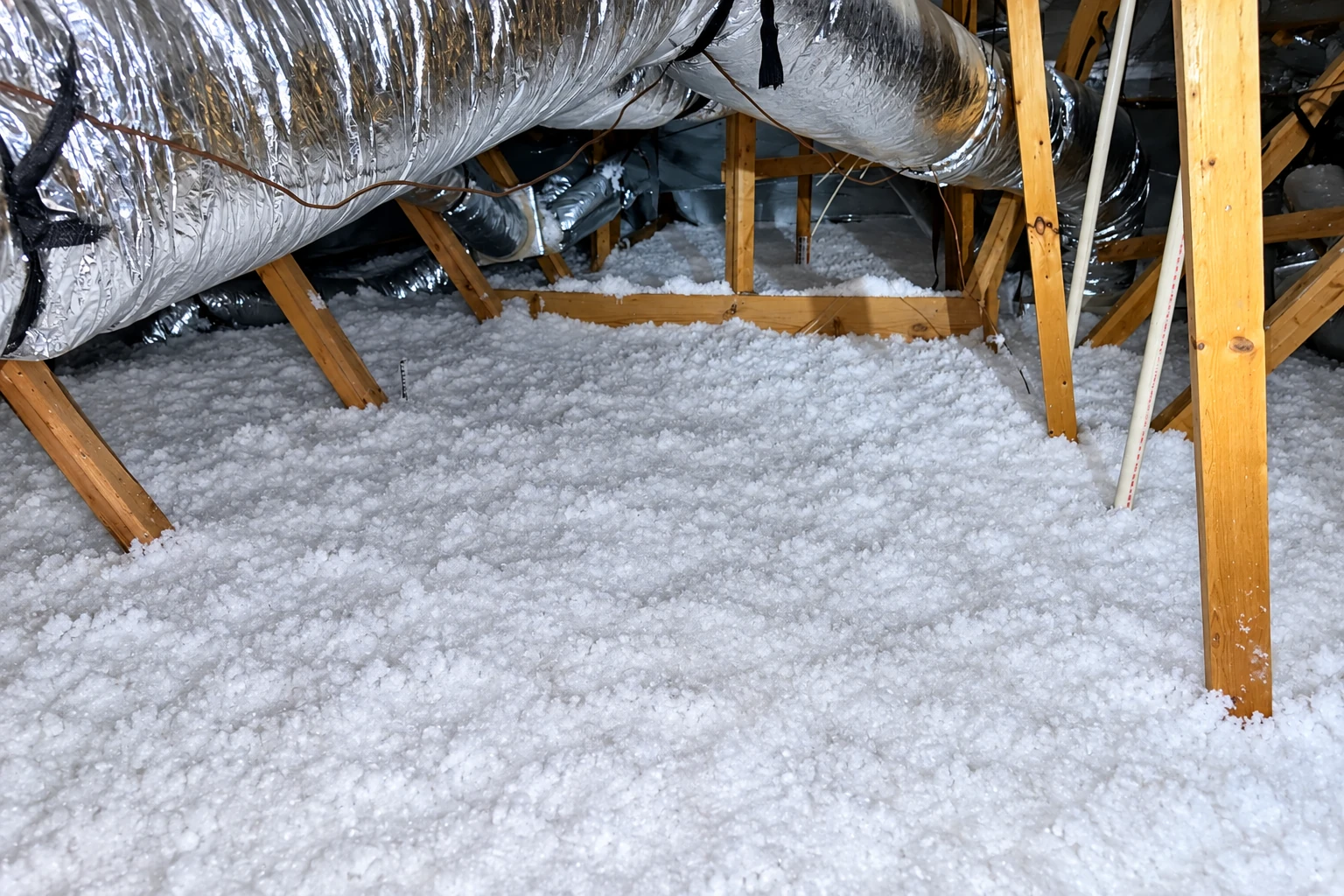
Many older attics have a thin, settled layer and open gaps around the hatch and pipes. Sealing those gaps and topping up with blown-in fill, loose insulation blown through a hose, usually makes the biggest difference.
Hot upstairs rooms, drafty halls or a climbing power bill? We add insulation to your attic, your walls or both, in the right order.
Retrofit insulation in South Pasadena means adding insulation to a house that's already built. Usually that's an older home that started with very little in the attic and often nothing in the outside walls. The goal is for upstairs rooms to stop running hot and for the house to feel less drafty.
The price mostly turns on how much of the house we're insulating, how many inches are already up there, how many gaps need sealing and whether old material has to come out first. The schedule turns on those same things, plus any repairs that should happen before we start. I come out, look at the space and put the work in writing, so you can compare it fairly before anyone books a date.
We're licensed and insured. California also sets out a license class written for insulation work, the C-2, which covers contractors who install insulation for heat or sound control.
I go into the attic and check the walls before we talk about materials, because the right choice depends on what's already up there and what shape it's in.
If I find a roof leak or old wiring, I'll tell you to deal with it first. New insulation laid over either one just wastes your money.
Our install crew does the work, and I walk the finished attic or walls with you before we call it done, so you can see what you paid for.
I start by looking at the attic and the outside walls together. Older houses often start with very little insulation in both, and you should decide whether to do one or both with the whole picture in front of you. While I'm up there, I check how many inches are already down, whether any of it is soaked or full of droppings, and whether a roof leak or old wiring needs attention first. If something has to be fixed or removed, I'll say so before we quote the insulation, because covering a problem only hides it.
In the attic, we seal the gaps first, for reasons I explain in the questions below. Then our crew brings the insulation all the way out to the edges where the ceiling meets the walls, not just deep in the middle. We set baffles at the eaves, which are short channels that keep the vents open so the attic can still breathe and the fill doesn't spill into them. Most of our attic insulation work is sealing and topping up loose fill, and that usually gives you the best value. Spray foam insulation costs more because it seals air while it insulates, and I recommend it mainly when your ductwork runs through the attic.
Here in South Pasadena, the city's Building Division issues permits for building, altering, demolishing and moving buildings and structures, and it inspects the work it permits. When a job needs a permit, we take care of the application and set up the inspection, and we check with the city about yours. The city also sets construction hours, with different hours for weekdays, for Saturdays, and for Sundays and city holidays. Southwest Monterey Hills has its own rules, so we schedule the crew around whichever apply to your street. You can also pull your own permit as an owner builder, though the city notes that this comes with legal obligations you should understand first. We're based in South Pasadena and also work in Pasadena, Alhambra, Glendale and other cities nearby, and we check each city's rules for your home.
Many older attics have a thin, settled layer and open gaps around the hatch and pipes. Sealing those gaps and topping up with blown-in fill, loose insulation blown through a hose, usually makes the biggest difference.
Walls in older houses were often left empty. We can fill them through small holes without opening them up, which I explain below, so you can decide whether the walls are worth doing.
The room over the garage often gains and loses heat through its ceiling and walls at once. I check both, because fixing only one side usually leaves the room running hot.
Property managers call us about older units with drafty rooms and complaints about heat. I put the scope in writing, so you can compare bids and plan the work around your tenants.
We reply within one business day to set a time. I come out, look at the attic and walls, and give you a free written estimate with no obligation, so you can compare it fairly.
Tell us whether you're thinking about the attic, the walls, a room over the garage or all of it, so I can plan to check each area while I'm there.
Let us know where the hatch is, such as a closet or the garage, and whether anything is stored under it, so I can get up there without disturbing your things.
If you've noticed loose, pebble-like insulation up there, please mention it when you reach out. It may be vermiculite, and that changes how we plan the job.
These example photos show blown-in attic fill, spray foam and wall insulation, and they're useful for talking through what might suit your house.
These are the questions homeowners ask most before adding insulation to an older house, answered the way I'd answer them on site.
Blown-in insulation in the Los Angeles area usually costs about $1,600 to $3,600 per project. That's the going market range, not our price. Where your job lands depends on the size of the attic, how much is already there, how much sealing it needs and whether old material comes out first. I look at the space and give you the figure in writing.
Sealing the openings through the attic floor comes first because insulation slows heat but doesn't stop air, and those gaps let air and moisture move into the attic. We close the gaps around pipes, wires and the hatch, fit metal blocking and collars around hot flues, and cover some recessed can lights before any insulation goes in.
We usually drill small holes near the top of each wall cavity and blow insulation in, a method called drill and fill. Drilling from inside leaves the wall's water-shedding layer untouched. Drilling from outside breaks that layer, so it has to be patched or replaced. The right side depends on access and that layer's condition, and I'll explain which side we plan to use and why.
Leave it undisturbed and assume it may contain asbestos, which is what the EPA recommends. Vermiculite looks like loose pebbles and is usually gray-brown or silver-gold. If you choose to remove it, the EPA says a trained, accredited asbestos abatement contractor should do the work, independent of whoever assessed it. If I find it, we stop and talk it through with you first.
Often it can, as long as the old layer is dry and clean. If it's been soaked by a roof leak or is full of droppings, it should come out first, because new material laid over it keeps the problem in your attic. I'll tell you which you have, and our insulation removal service handles it when needed.
Call (626) 597-0202 or use the form, and if you're planning a roof or wiring repair anyway, we can plan the insulation around it.