
Attics where the ductwork lives
When your ducts run through the attic, foam on the underside of the roof brings them inside the insulated space, so cooled air isn't lost in a hot attic before it reaches the rooms.
If the room over the garage runs hot or the crawl space feels damp, closed-cell foam seals and insulates it in one dense layer.
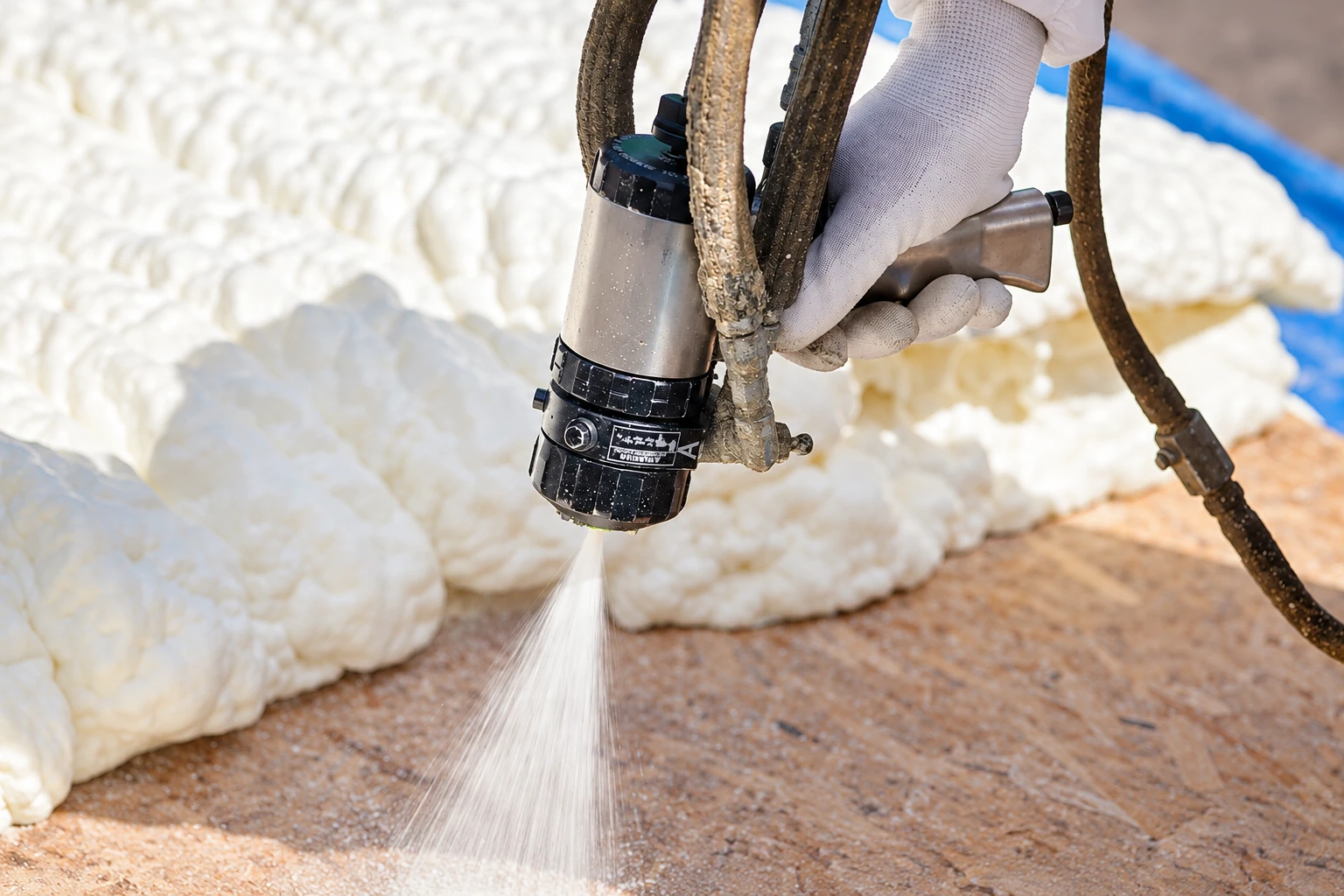
Closed-cell foam insulation is a dense, rigid spray foam that we apply in South Pasadena attics, crawl spaces and walls to slow heat, stop drafts and keep moisture vapor from passing through.
Most of our calls come from older houses with drafty rooms or high bills, and the spots people point to are usually the same: a hot upstairs, cold floors over the crawl space or the room over the garage.
The price depends on how many square feet we're covering, how thick the foam needs to be, how easy the space is to reach and whether old insulation or a leak has to be dealt with first. The schedule turns on that same prep, on whether your city wants a permit and on your family having somewhere to stay for the spray day. I look at the space and put the work in writing, so you have your own figure to compare before anyone climbs into your attic.
I come out myself to look over the attic, crawl space or walls before we talk about materials, because the right foam, or no foam at all, depends on what's actually there.
Closed-cell foam over a leaking roof or old wiring just wastes your money, so if something needs fixing first, I'll tell you at the estimate rather than after the crew has sprayed.
Our install crew does the spraying, and before we call it done, I walk the finished space with you so you can see the coverage at the edges as well as the middle.
Closed-cell costs more than open-cell for the same space, so I explain where I think it's worth that cost and where open-cell foam insulation or another material would serve you just as well. In an attic with no ductwork, sealing the gaps around can lights, pipes and the hatch, then topping up the loose fill, usually wins on cost, and I'll tell you so. When the ducts live up there, or the space is damp or shallow, the extra cost of closed-cell usually earns its keep.
The order matters as much as the material. If the old insulation is soaked or full of droppings, it comes out first, because foam over a problem only hides it. Our crew masks off the rest of the house, sprays in even passes so the edges get as much as the middle, and keeps the eave vents clear wherever the attic still needs to breathe.
Before I started this business in South Pasadena in 2023, I spent my early working years on crews for a large commercial insulation company, doing offices, warehouses and metal buildings. That's where I learned to work in this order, and we still take on commercial insulation for property managers alongside our work in homes.
When your ducts run through the attic, foam on the underside of the roof brings them inside the insulated space, so cooled air isn't lost in a hot attic before it reaches the rooms.
Under a raised floor, closed-cell foam stops drafts where the house meets its foundation and keeps damp air off the framing, so cold floors over a crawl space usually feel warmer.
Heat and drafts come up through the floor, and foam sprayed against the framing seals the gaps fiberglass batts leave open, so that room stays closer to the rest of the house.
When a wall is open to the studs, closed-cell gives you more insulation per inch than looser materials, which matters when the cavity is shallow and every inch counts.
Send the form and we'll reply within one business day to set a time. I come out, look at the space and put the work in writing, free and with no obligation.
Let us know whether it's the attic, the crawl space, the room over the garage or walls you're opening, so I know what to look at closely when I come out.
A guess from your home's listing or a quick tape measure gives me a starting point, and I measure the space myself on site before anything goes in writing.
If anyone at home has asthma, respiratory allergies, a skin condition or a past reaction to spray foam, tell us, since they should review the product information first and another material may suit them better.
These photos show closed-cell and open-cell foam, crawl space and attic layouts, and finished coverage we can talk through for your house.
These are the questions I hear most when I'm standing in a South Pasadena attic or crawl space talking about closed-cell foam.
Spray foam insulation in Los Angeles usually costs about $2 to $5 per square foot, and that range is for spray foam in general, not closed-cell alone. Closed-cell costs more to install than open-cell for the same space, mainly because it puts more material into the same volume. Your own figure comes from the written estimate once I've seen the space.
Plan on everyone being out of the house for at least 24 hours. When it's safe to come back, what we call the re-entry time, depends on the product, your home and whether children or older relatives live with you, so line up a place to stay before the spray day.
Usually not, because closed-cell foam at its usual thickness already works as a vapor retarder, and energy guidance for hot, dry climates says to leave out an extra one on the inside. Closed-cell does well there at full thickness or with another material. Ask any installer how they plan that layer, because there's no standard way to remove foam that went on wrong.
The city's Building Division issues building permits in South Pasadena, reviews plans and inspects permitted jobs. Each city decides what needs a permit, so we check with the division on your job, and when one is needed we take care of the application and set up the inspection. If you're in Pasadena, Alhambra, Glendale or another city nearby, we check that city's office instead.
In most of South Pasadena, construction runs 8 a.m. to 7 p.m. on weekdays and 9 a.m. to 7 p.m. on Saturday, with 10 a.m. to 6 p.m. on Sundays and city holidays. Southwest Monterey Hills has different rules, so we check those if your home is there. We schedule the spray day inside those hours, so your time away starts when you can plan around it.
The state licensing board's C-2 Insulation and Acoustical Contractor classification covers contractors who install any insulating material for temperature or sound control. It's fair to ask any insulation contractor about their license before work starts. We're licensed and insured, and our work is backed by our satisfaction guarantee.
We take calls at (626) 597-0202 every day until 11 PM, so you can reach us after work or on a weekend, or send the form.